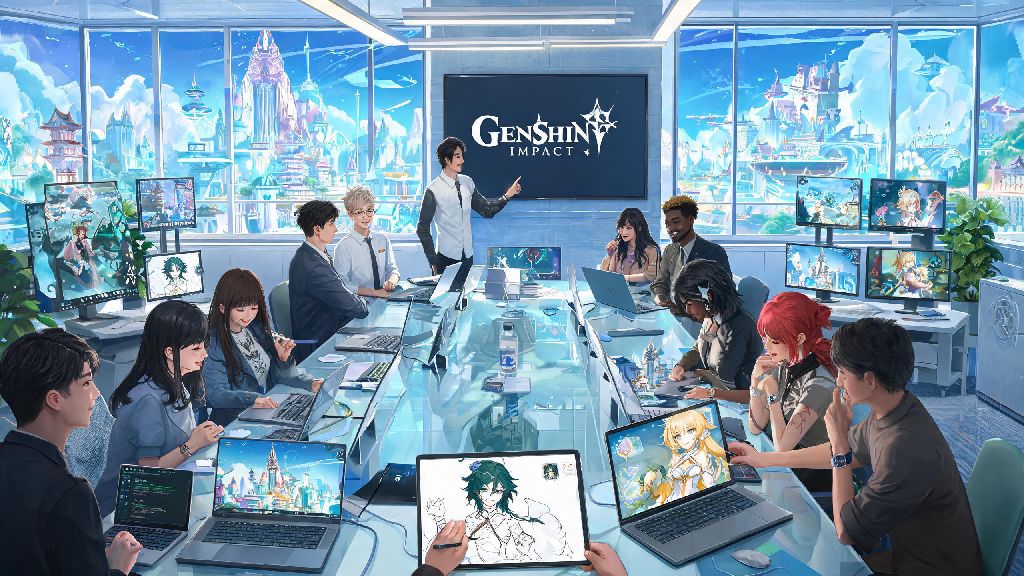
If you’ve spent dozens of hours exploring Teyvat, pulling for limited 5-star characters, or grinding Spiral Abyss runs, you’ve probably wondered who owns Genshin Impact at some point. The game’s massive cross-platform success, consistent update schedule, and global fanbase make it easy to forget there’s a large team working behind the scenes to keep the world running. Most players hear vague mentions of Chinese game studios or rebrands, but few know the full story of the game’s ownership, how it affects what you see in-game, and what that means for future content drops.
Who Owns Genshin Impact, Exactly?
If you’ve seen debates about who owns Genshin Impact on fan forums, you might have seen people mix up miHoYo and HoYoverse, but they are the same company, just rebranded in 2022 to reflect their global expansion goals. The studio was founded in 2012 by three computer science graduates from Shanghai Jiao Tong University: Cai Haoyu, Liu Wei, and Luo Yuhao, who remain the majority shareholders to this day. HoYoverse retains 100% creative control over all Genshin Impact content, from character designs to archon quest story beats.
Regional partners like Sony or local marketing teams do not hold any stake in the core Genshin Impact IP. They only support with platform-specific distribution, local customer service, and server hosting for different regions, with no input on creative or business decisions for the game itself. That level of independent ownership is extremely rare for a game with a global audience of over 60 million monthly active players.
How Ownership Shapes Your Genshin Impact Experience
One of the biggest perks of the current structure around who owns Genshin Impact is that you don’t have to worry about buying separate copies of the game for different platforms, unlike many other cross-platform titles. HoYoverse’s full control over the IP lets them offer full cross-save across mobile, PC, PlayStation, and upcoming Switch ports, with no locked content between platforms. You’ll never see region-locked character banners or delayed story updates because of conflicting publisher demands, a common pain point for players of other global live-service games.
This independent structure also lets the team plan long-term story arcs years in advance, which is why the archon quest line feels so cohesive across multiple regions. They don’t have to adjust story beats or character designs to meet the demands of third-party publishers, so they can stick to the 7-region roadmap they laid out before the game first launched in 2020. Even monetization rules stay consistent across all regions, so you don’t have to pay higher prices for primogems or battle passes depending on where you live.
Common Misconceptions About Genshin Impact Ownership
There are dozens of untrue rumors floating around Reddit, TikTok, and fan Discord servers about who owns Genshin Impact, many of which have been spread for years without any factual backing. We’ve broken down the most common false claims below to clear up confusion:
None of these misconceptions change the core fact of who owns Genshin Impact, so you don’t have to worry about sudden shifts in content direction from a third-party publisher. Any changes you see to the game come directly from the HoYoverse development team, often in response to community feedback.
What Genshin Impact’s Ownership Means for Future Content
HoYoverse has publicly confirmed they plan to support Genshin Impact for at least 10 years after its initial launch, meaning we’ll see new content through at least 2030. Their full ownership of the IP lets them invest heavily in long-term development without needing to answer to outside shareholders who might push for short-term profit over quality. Players can expect more cross-game collabs, consistent 6-week update cycles, and expanded cross-platform support for years to come, thanks to the studio’s full control over the IP.
They also have the freedom to run limited-time community events and charitable campaigns without needing approval from outside partners. For example, their 2023 campaign that let players donate to reforestation efforts by completing in-game quests was planned and executed entirely by the HoYoverse team, with no third-party involvement. As of 2024, Genshin Impact generates over $1 billion in annual revenue, with more than 70% of that revenue being reinvested into game development, server maintenance, and community events.
I’ve been playing since the 1.0 launch in 2020, and I’ve seen firsthand how their independent ownership lets them pivot fast when the community gives feedback. When thousands of players asked for better artifact farming options, they added the strongbox system in a later update within just a few months, no red tape or publisher delays to slow them down. That level of responsiveness is almost unheard of for a game of Genshin’s size, and it’s directly tied to their independent ownership structure.
At the end of the day, the answer to who owns Genshin Impact is simpler than many rumors make it out to be: it’s fully controlled by HoYoverse, the independent studio that built it from the ground up. That independent ownership is a big part of why the game feels so cohesive, accessible across all platforms, and responsive to fan feedback, even as it grows to support a global community of tens of millions of players. Whether you’re a casual player who only logs on for event rewards or a hardcore Abyss grinder, understanding the team behind the game can help you know what to expect from future updates and collabs.