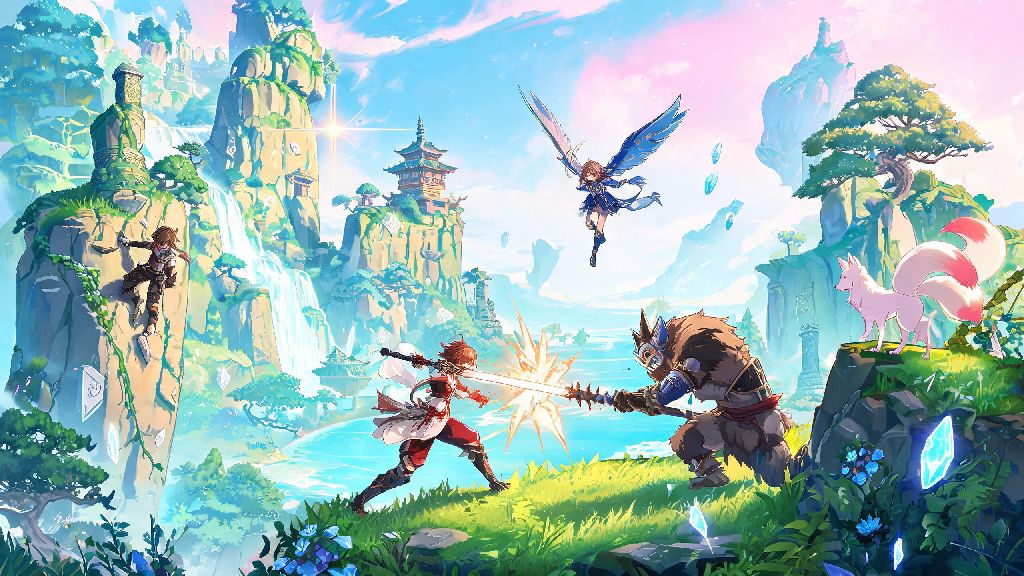
If you've spent hours climbing Teyvat's tallest cliffs, pulling for your favorite 5-star character, or grinding domains for better artifacts, you've probably wondered what game is Genshin Impact based on at least once. The game feels familiar enough to make new players feel right at home, but it also has so many original features that it's hard to pin down to a single source. While Genshin is a fully original intellectual property, it draws from a huge range of gaming, cultural, and media inspirations that shaped every part of its world, combat, and story. We're breaking down all the biggest influences, from classic open world RPGs to real-world folklore, so you can spot all the little nods next time you log in.
What Game Is Genshin Impact Based On? The Biggest Gaming Inspirations
When we first asked what game is Genshin Impact based on back at its 2020 launch, the first comparison almost every player made was to Breath of the Wild. The ability to climb almost any surface, glide across the map without loading screens, and use environmental elements like fire to burn grass or wind to move objects were all direct callbacks to Nintendo's hit open world title. HoYoverse has repeatedly confirmed that Breath of the Wild was a core early inspiration for Genshin's open world design, but they also made intentional changes to set their game apart. For example, Genshin's world is split into distinct themed regions, each with its own story, characters, and rules, instead of the more uniform open world of Hyrule.
Many players overlook that Genshin's elemental reaction system is a direct evolution of the one first tested in Honkai Impact 3rd, HoYoverse's previous action RPG. That system lets you combine different elements to trigger effects like vaporize, freeze, or bloom, which adds a layer of strategic combat that you won't find in Breath of the Wild. Genshin also pulls small mechanics from other popular RPGs, like Final Fantasy XIV's party-based combat and world boss encounters, and even the open world exploration loop from The Witcher 3, where you can stumble on hidden side quests just by wandering off the main path.
Non-Gaming Inspirations That Shaped Teyvat's World
Genshin's inspirations don't stop at other games, though. A huge part of its charm comes from the real-world cultural and media references that shape every part of Teyvat. Each region is based on a specific real-world location and time period, down to the food, clothing, music, and even local customs. Each region's architecture, food, and story quests are directly rooted in real-world cultural history, not just other games. For example, Liyue's traditional tea houses, jade trade, and respect for elder gods all draw from thousands of years of Chinese history and folklore, while Mondstadt's windmills, beer festivals, and knightly order are clear nods to medieval German and Swiss culture.
Some of the most obvious real-world cultural nods in Genshin include:
The game also pulls heavy inspiration from anime and film, especially Studio Ghibli's work. You can see nods to Castle in the Sky in the game's gliding mechanics and floating islands, while the whimsical, nature-focused side quests and cute creature designs feel like they could come straight out of Spirited Away or My Neighbor Totoro. Even some character designs take cues from popular anime, like Klee's explosive, chaotic personality mirroring that of Anya Forger from Spy x Family, a reference HoYoverse even acknowledged in a limited-time crossover event.
How Genshin Impact Differs From Its Inspirations
It's important to note that while Genshin pulls from all these sources, it's far from a copy of any single game or property. The development team took all these inspirations and mixed them with original ideas to create a product that feels totally unique. Genshin's cross-platform accessibility is one of its biggest unique selling points that no prior open world RPG had pulled off successfully at launch. You can start playing on your phone during your commute, pick up where you left off on your PS5 at home, and then log in on your laptop when you're traveling, all with the same account and no lost progress. That level of accessibility is a big reason the game built such a huge, global audience so quickly.
Another big difference is the live service update model. Unlike single-player open world games that get a few DLC packs and then no new content, Genshin gets a major update every six weeks, with new regions, characters, story quests, events, and limited-time rewards all available for free. The gacha system, while controversial for some players, is what funds these constant free updates, so you never have to pay a base game fee or buy DLC to access new content. If you're a casual player, you can easily get through all the main story and most events without spending a cent, just by saving up free primogems you earn from quests and exploration. The elemental reaction system is another totally original feature that sets Genshin apart from every other open world RPG on the market. No other game lets you combine seven different elements in dozens of ways to create totally different combat styles, whether you prefer to run a freeze team that locks enemies in place, a bloom team that spams explosive seeds, or a geo team that builds shields to tank every hit.
Hidden References You Can Spot In-Game
If you're the type of player who loves hunting for Easter eggs, you'll find tons of hidden references to other games, films, and myths scattered all across Teyvat. Many of Genshin's character story quests include subtle references to classic JRPG plot lines, like Diluc's revenge arc mirroring common anti-hero stories from 2000s Final Fantasy titles. The Windrise tree in Mondstadt, where Venti first woke up after the Archon War, looks almost identical to the Great Deku Tree from the Zelda franchise, but has its own unique lore tied to the death of the previous Anemo archon.
The Hilichurl enemies that you fight all across Teyvat speak a fully constructed language, developed by HoYoverse's writing team based on real Indigenous languages from around the world, so dedicated fans have even been able to translate parts of it. You'll also find small nods to other HoYoverse titles scattered around the world, like posters for Honkai Impact 3rd characters in Inazuma's cities, or references to the multiverse that connects Genshin to Honkai: Star Rail and Honkai Impact 3rd. These little references are easy to miss if you're not looking for them, but they add a fun extra layer of depth for long-time fans of the studio's work.
At the end of the day, if you've been asking what game is Genshin Impact based on, the answer is that it's not based on any single title. It's a carefully crafted mix of dozens of different inspirations, all tied together with original writing, unique gameplay mechanics, and a constantly updating world that keeps players coming back year after year. You can spot nods to your favorite games, anime, and real-world cultures as you explore every corner of Teyvat, but the core experience is totally one-of-a-kind. Next time you log in to do your daily commissions or explore a new event, take a minute to slow down and look around, you might be surprised how many little hidden references you can spot for yourself.