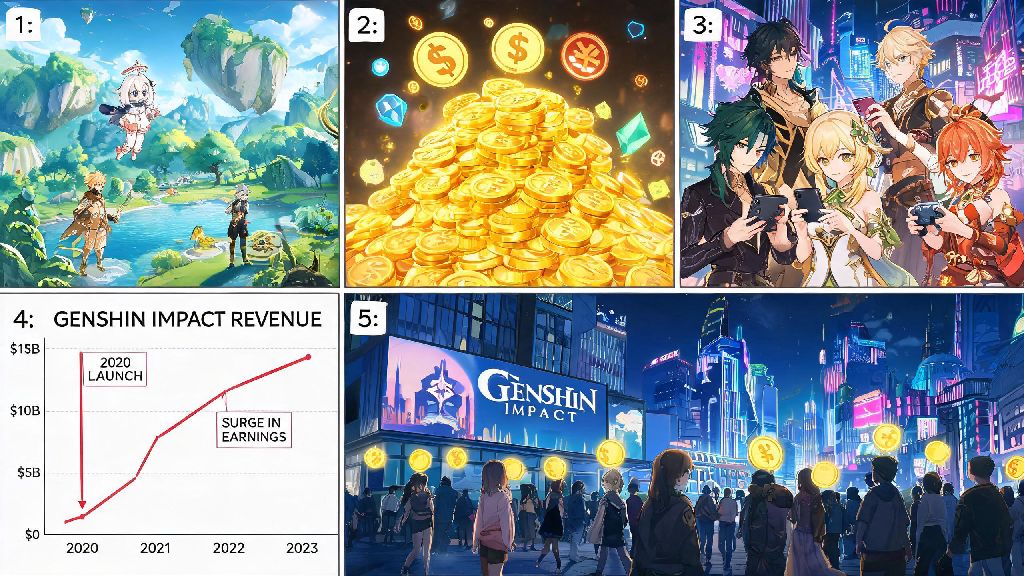
If you’ve ever spent hours grinding for Primogems to pull your favorite 5-star character, or watched streams of players dropping hundreds of dollars on limited banner pulls, you’ve probably wondered how much money did Genshin Impact make over its run. It’s no secret that the open-world gacha game has a massive global player base, but the actual earnings numbers are far more staggering than most casual fans realize. I’ve followed Genshin’s market performance since its 2020 launch, and the mix of loyal players, regular content drops, and fair monetization has turned it into one of the most profitable video games of all time.
How Much Money Did Genshin Impact Make Across All Platforms?
As of 2024, Genshin Impact has generated more than $4.8 billion in total revenue across mobile, PC, and PlayStation platforms. That number doesn’t even include merch sales, concert tickets, or other off-game revenue streams tied to the IP, so the actual total value of the franchise is even higher. When you look at how much money did Genshin Impact make in its first year alone, the $2 billion mark was an unprecedented achievement for a brand new game IP with no prior built-in audience. Mobile revenue alone accounts for roughly $3.4 billion of that total, with PC and PlayStation contributing the remaining 30% split fairly evenly between the two.
What’s most impressive is its consistent earnings long after launch. Most live service games see revenue drop 60-80% within 18 months of release, but Genshin still pulls in $50-80 million per month on average. Months with popular limited banner releases can see that number jump to $120 million or higher, a pace most studios can only dream of for a game that’s been out for multiple years.
Key Revenue Sources That Drive Genshin Impact’s Earnings
The vast majority of Genshin Impact’s revenue comes from its gacha banner system, which makes up roughly 80% of all in-game purchases. Unlike many pay-to-win gacha games, Genshin’s system lets players spend on characters and weapons purely for preference, as all main game content can be beaten with free, easily obtainable characters. That low-pressure approach is a big part of why players are willing to spend consistently over time.
Blessing of the Welkin Moon is the most consistent small-ticket purchase for casual players, with millions of players paying $4.99 per month for a daily stream of Primogems. The $9.99 monthly battle pass is another steady earner, offering valuable upgrade materials and a small number of Primogems for players who complete regular in-game tasks. Occasional cosmetic skins for popular characters add a small but reliable extra revenue stream as well.
These are the three highest-grossing banner runs in Genshin Impact history to date:
Limited banners tied to major archon quest releases consistently outperform standard banner earnings by 3x to 4x, which is why HoYoverse schedules popular character releases to align with big story updates. That said, the gacha model that drives most of this revenue is not without criticism, as some players report spending far more than they planned on limited banner pulls. It’s always a good idea to set a strict budget for in-game purchases if you choose to spend, to avoid regret later.
Regional Earnings Breakdown for Genshin Impact
Genshin Impact’s global appeal shows clearly in its regional earnings split, with no single market making up more than 40% of total revenue. Its home market of China is the top spender, contributing roughly 35% of all earnings, even with strict gacha spending limits for minor players in the country. Many fans are surprised to see that Japan contributes such a large share when you break down how much money did Genshin Impact make outside of its home market.
Japan is the second-largest market, making up 28% of total revenue, thanks to the country’s mainstream gacha culture and huge overlap between Genshin’s art style and popular anime franchises. North America comes in third at 18% of total revenue, followed by Europe at 12%, and the rest of global markets making up the remaining 7%. Chinese players spent more than $1.7 billion on Genshin Impact as of 2024, a number that would be even higher without the minor spending restrictions in place.
Regional events tailored to local audiences also drive spikes in regional spending. For example, the annual Lantern Rite event tied to Lunar New Year regularly drives a 20-30% revenue jump in China, while anime cross-promotions and in-game events aligned with Japanese holidays push up earnings in that market for their respective runs.
What This Revenue Means for the Future of Genshin Impact
For regular players, Genshin’s massive earnings are almost entirely good news. HoYoverse has already committed to releasing 7 total regions for the game, with the story planned to wrap up around 2030, and the steady revenue stream ensures the studio can afford to keep content quality high. Each new region takes hundreds of developers over a year to build, with full voice acting in 15 languages, original soundtracks, and hours of story content all included for free for all players.
HoYoverse allocates roughly 30% of Genshin Impact’s annual revenue back into content development for the game, which is far higher than the industry average of 10-15% for live service games. That investment shows in the polish of new updates, from the intricate underwater mechanics added in Fontaine to the detailed open world design of Sumeru’s rainforest and desert regions.
A common concern among players is that high earnings will make the studio push more aggressive monetization, but so far that hasn’t happened. There are still no paywalls for main story content, no required purchases to access endgame challenges, and the rate of free Primogems given out through events and updates has stayed consistent since launch. The revenue also funds HoYoverse’s other projects like Honkai: Star Rail and Zenless Zone Zero, but Genshin remains the studio’s top priority for content investment for the foreseeable future.
At the end of the day, asking how much money did Genshin Impact make gives you more than just a big number to gawk at. It shows how a well-made live service game that respects its player base can build long-term success, instead of relying on quick cash grabs to turn a profit. For regular players, that steady revenue means you can expect years of high-quality new regions, characters, and story updates to come, without having to spend a cent if you don’t want to. Whether you’re a free-to-play player who only logs on for events or a spender who chases every limited character, you’re part of one of the most successful gaming runs in history.